“What’s the secret of PMP success that you’d like to share with every PMP aspirant?”, I asked Joseph as we sat down for the interview.
Joseph took 9 months to go from ‘planning to PMP’.
Somewhere in between, he gave up on it.
Then he noticed that others in his group were getting certified.
That motivated him. He wanted to do it this time, for sure. No matter what.
But he didn’t give himself a short timeline, so he is forced to slog through to get there.
He did something smarter.
You will love his ingenuity, how he used human psychology to achieve his goal without burdening himself of the enormity of the goal, like make of us do.
If nothing else, I would hope that you will take his mindset and approach from this interview.
Joseph John is an Engineer, MBA, and an International Diploma holder in Occupational Health and Safety.
He has a rich Operational, Project Management, and leadership experience of over 25 years in Petroleum, Retail, Logistics Safety, and Sustainability.
He scored a perfect Above Target in all the 3 domains on his PMP exam, and I HAD to pick his brains.
So you can use some of his secrets for your upcoming PMP exam.
Joseph shared everything – from his choice of study resources, study approach to avoid stress, 2 blockers (lack of confidence and timing exam date), exact process of tackling the final exam, and finally a few insightful study tips.
Here’s what I found out.
What made you take up PMP?
 I have been managing projects of various size and complexity for many years now. And getting PMP certified was a desire that emanated from the need to learn the right project management methodology, so I can improve my skills.
Also, every year, I plan for certification/study to upskill and PMP was one of the goals in that routine.
Now that I am PMP certified, I can confidently say this –
PMP has really helped me to speak with more confidence with other PMs or Program managers.
Also, I studied a lot about Agile and Servant leadership, and now I have a changed perspective about leading people in my every day work.
PMP has been a game changer for me.
According to you, what is that one thing every PMP aspirant must have/use?
First and foremost, we need to understand that PMP is a marathon race and not a short sprint.
There will be times when we feel stressed about lack of progress, and we must understand that it’s a part of any race.
Do not refer to too many resources, it is an easy way to get overwhelmed and confused. Pick up one resource that resonates with your style of learning (book, video course, coaching etc). And then only move to other 1-2 resource to understand in entirety.
Keep in mind that for PMP, there is no well-set and prescribed resource that you can study and be done with. That is the reason I selected 3 resources – in order to prepare myself in the best possible way.
Now let me answer the question you raised.
If there is ONE single factor for success of PMP exam, it is: BE CONSISTENT.
You cannot have a burst of study of a few days and then leave it for weeks on end. Even studying only on the weekends does not help recall earlier content, as I discovered.
I studied for 3 months for 2-3 hours every single day, spending a bit more time on the weekends.
I have heard people clearing PMP with 1 day preparation and some even with 2-3 hours, but we need to remember that such exceptions are extremely rare!
Also read:
- Kelly shows how every PMP aspirant can use Mindset and Strategy to pass the exam easily
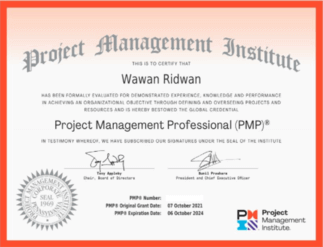
- Discover how Wawan cracked PMP on first try
- Melissa shares how she scored Above Target with PMP Process Chart game (free access)
Which resources did you use for your preparation?
Like I said earlier, I used one resource for casual study of basics, and one for deep-dive.
- Rita Mulcahy’s book for understanding basic concepts.
- PMBOK and Agile practice guides were a great help.
- For better coverage I watched YouTube videos of Andrew Ramdayal, David Mclachlan, Praizion, Aileen and so on.
- I also did free exams from Oliver Lehmann, Elena, and free material from web.
I highly recommend every PMP aspirant that you do some research and choose the resources that are easy for you to use. It could be a book, video course, or working with a coach.
How did you approach your study?
My approach was initially to study at a causal pace of 1-2 hours a day (4-5 hours per week). [continue reading…]
 “To succeed, PMP mindset and Strategy are key”, said Kelly when I asked about how she did it.
 I became




 During our conversation, I found Wawan to be quite frank and open, and it was obvious in his helpful answers to the questions I asked.
 Many certification programs focus only on a specific domain or geography. PMP, on the other hand, is global and works with any industry and in any location. So, regardless of the professional background and industry.


 Initially I considered taking the